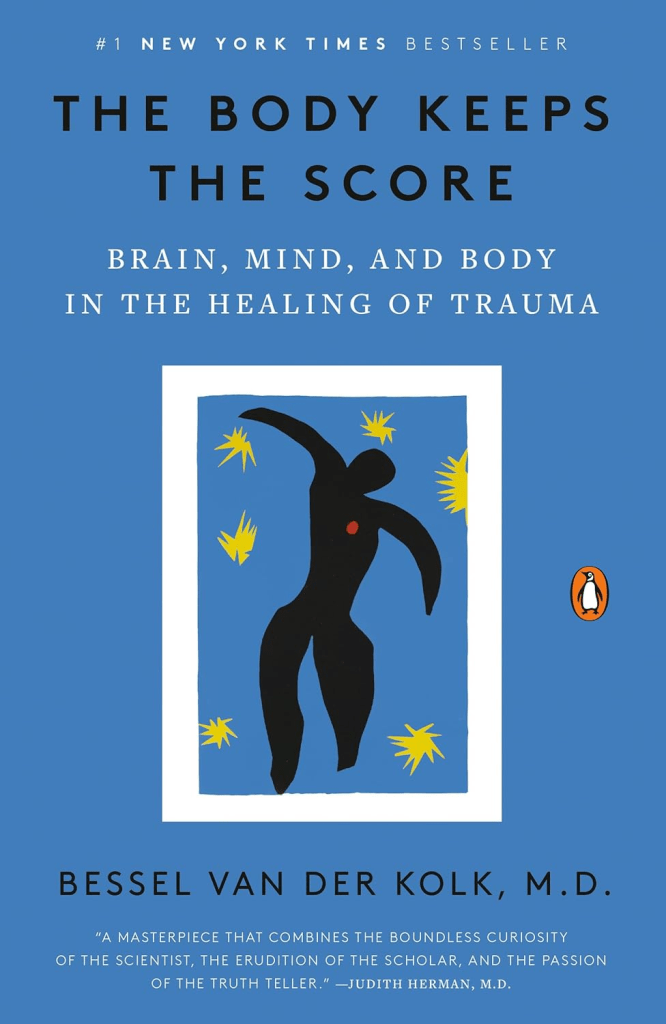
The Body Keeps the Score by Bessel van der Kolk
Disclosure: As an Amazon Associate, I earn from qualifying purchases. This post may contain affiliate links, which means I may receive a small commission if you purchase through my links, at no extra cost to you.
The Body Keeps the Score by Bessel van der Kolk is a book I would recommend carefully. It is excellent, and it is heavy. Read it slowly. This is not something to rush through during an already fragile week because trauma does not sit politely on a page. It can stir up memories, body reactions, anger, grief, and questions you thought you had packed away.
The book explains how trauma affects more than memory. What happened can leave fingerprints on the brain, the nervous system, relationships, trust, emotions, and the way a person experiences safety. Someone may know the danger is over and still feel their body bracing for the next hit. They may want closeness but tense when another person gets near. Moving forward can make sense in their head while the rest of them is still stuck in survival mode.
That explanation gives language to experiences many people have struggled to describe. Trauma includes more than the event itself. It reaches into what the mind and body had to do to survive, along with what they may keep doing long after survival is no longer required.
How I Read It
I listened to this one on Audible, and that was probably not the best format for me. A physical copy would have given me room to underline, write in the margins, close it for a while, and leave it face down on the table when a section hit too close.
Laundry, driving, and background noise do not leave much room for that kind of reading.
Parts of the book are disturbing because trauma itself is disturbing. The stories and explanations can be a lot to take in, especially for someone with a trauma history. Going slowly is not avoidance. It is paying attention to what is happening inside you while you read instead of forcing yourself through another hard thing so you can say you finished it.
Put the book down when you need to. Come back later, and talk with someone safe if a chapter brings up more than you expected.
What I Appreciated
Van der Kolk does not leave the reader staring at a list of everything trauma can damage. The book also looks at ways people may reconnect with their bodies, emotions, relationships, and sense of safety. Healing is not presented as quick or identical for everybody, which I appreciated because real healing rarely follows a neat schedule.
A person can feel broken beyond repair when their body keeps reacting to danger that is no longer in the room. Learning why that happens can loosen some of the shame. With support, care, and time, the brain and body can learn different patterns.
I would recommend The Body Keeps the Score to counselors, trauma survivors, caregivers, parents, church leaders, and anyone who wants a deeper understanding of what trauma can do. Still, I would not hand it to someone with a casual, “You should read this.”
My recommendation would come with a warning that the book is worth reading, but it needs room around it and some care while you work through it.
There is no prize for pushing through fifty pages when five pages are enough for one day. Sometimes the work is one section, one body reaction, one breath, and one honest conversation at a time.