Releasing the Fantasy That Control Keeps You Safe
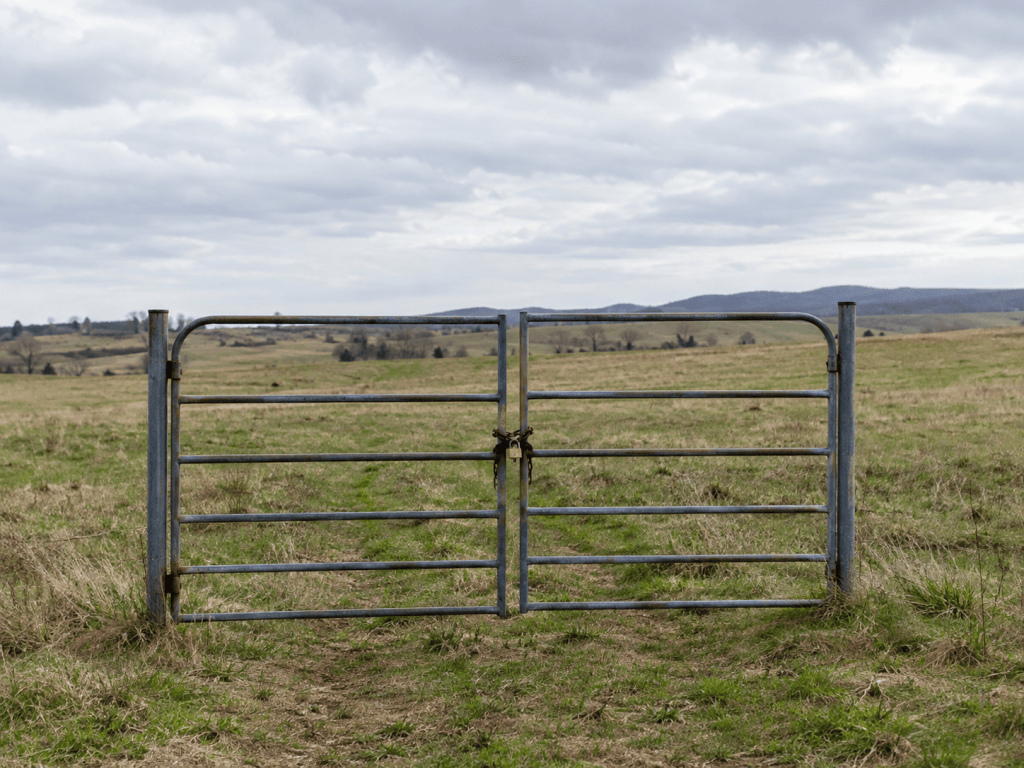
I drove past a field once that had a gate in it. Chained, padlocked, hinges good. And no fence. Not on either side. Just a locked gate standing in the middle of open grass.
I’ve thought about that gate for years, because it is the most accurate picture of anxious control I have ever seen.
The truth part
Control does not keep you safe. It keeps you busy.
Some of what you do genuinely reduces risk. Seatbelts, smoke detectors, saving money, going to the doctor, locking the door once. Real prevention exists and I’m not against it.
Most of what a highly controlled person does has no causal relationship to the outcome they fear. Checking the stove a fourth time. Re-reading the email. Running the scenario at 2am. Monitoring somebody’s mood all evening. Keeping the house immaculate. None of that is a fence. It’s a gate with a good lock on it, sitting in an open field.
I’d rather say that to you plainly than keep you paying for it.
Why the illusion holds
You’ve never had a clean test. Every day you do the controlling, and nothing terrible happens, and the brain credits the controlling. It’s the same loop I described back in post one. Uninterrupted, that loop can run for forty years and get stronger the whole time.
There’s a second thing propping it up, and it’s harder to say. Bad things do happen sometimes. And when they happen to someone who was controlling carefully, the conclusion tends to be that she wasn’t careful enough, rather than that control was never the variable.
That’s a closed system. It can only ever produce more gripping.
The hard thing underneath
Here’s what’s actually true, and I’m going to say it without softening it because I think you can handle it and because you already know.
Some things are going to happen that you cannot prevent.
People you love will make choices that hurt them. Bodies will do what bodies do. There will be a phone call someday that you did not see coming, and no amount of vigilance between now and then will change whether it comes.
That’s not fatalism and it’s not despair. It’s the actual terms of being a person, and everybody who has ever lived has been under the same terms.
The reason I say it out loud is that a great deal of anxious control is an attempt to negotiate an exemption from those terms. And the negotiating is exhausting, and there is no exemption, and the energy is better spent elsewhere.
What you get for admitting it
This is where people expect despair and find the opposite.
If control isn’t what’s keeping you safe, then all that effort is available for something else. That’s a lot of hours a week and a lot of energy, redirected toward things that actually pay.
If control isn’t what’s keeping you safe, then the bad things that happened before weren’t your failure to control hard enough. That one matters enormously for people carrying guilt over something they could not have prevented.
If control isn’t what’s keeping you safe, then you’re allowed to enjoy something without monitoring it. The dinner, the vacation, the good stretch, the kid’s game.
What actually does help
Since I’ve taken something away, let me put something in its place, because this is the practical half.
Real preparation, done once. The insurance, the will, the fire extinguisher, the savings, the checkup. Do it, then file it, and stop revisiting it.
Capacity, which is the underrated one. You cannot prevent most things. You can be a person who has the resources to handle them. Sleep, health, savings, skills, and two or three people who will actually show up. That’s a fence. The rest is a gate.
Relationships, which is the biggest predictor of how anybody comes through anything hard.
Your own repair work. A regulated nervous system handles a crisis far better than an exhausted, hypervigilant one. The irony is that the vigilance is what leaves you least prepared for the thing you’re vigilant about.
Faith, for me. Not as a guarantee against bad outcomes, since that’s not what it’s ever been, but as a place to put the weight of what I can’t carry.
The gentle part
I don’t want anybody reading this to feel foolish. You built that gate for a reason, usually a good one, usually young, usually after something happened that nobody protected you from.
Knowledge is power, and when you know better you do better. Now you know what the gate is and isn’t doing, and you can decide how much of your life you want to spend maintaining it.
Are you sure control is what’s been keeping you safe? Sit with that a while. I think you already know the answer, and I think it’s part of what’s been so tiring.
This is education, not therapy. If you’re in crisis, call or text 988 for the Suicide and Crisis Lifeline. If you’re in Kentucky and ready to look at what you built and why, I’d be honored to do that with you. Circle of Hope Counseling Services.
Related Posts
Leaves Fall to Protect the Tree
