Faith Without Denying Feelings
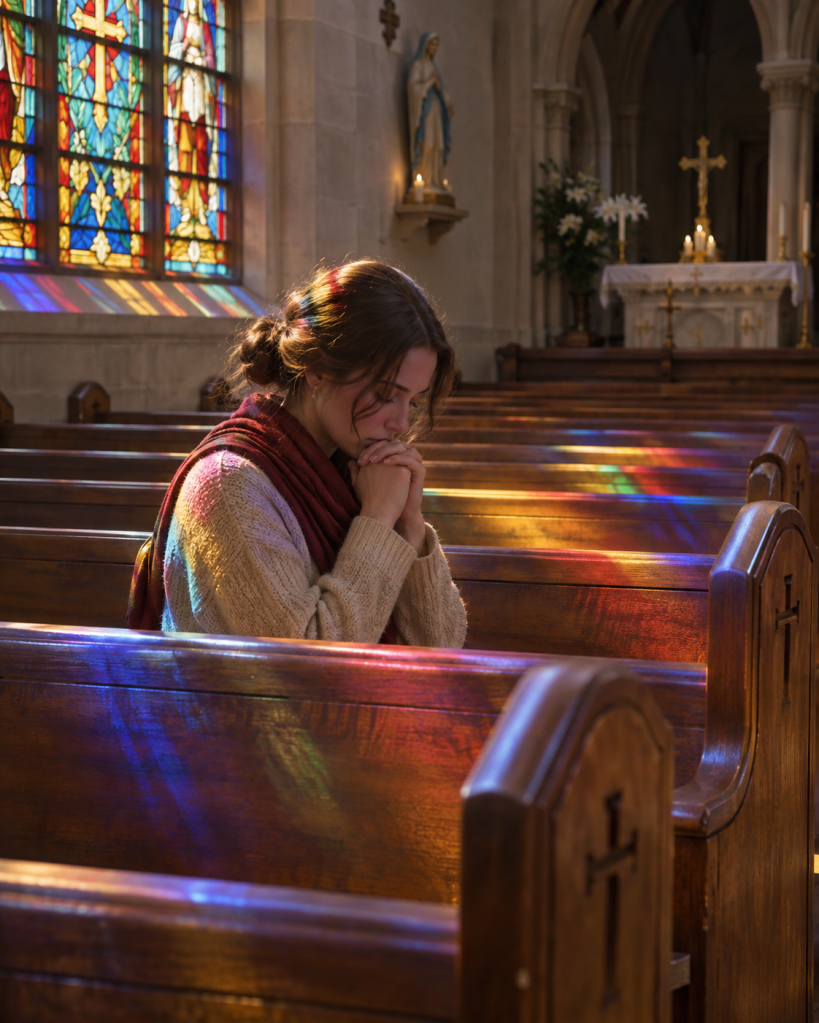
“Just give it to God.”
“Everything happens for a reason.” “Don’t cry, she’s with Jesus now.”
Most of the time, people say those things with love in their hearts. I believe that. But I’ve watched them land on hurting people like a butterfly bandage on the Grand Canyon. A tiny, tidy little fix stuck on top of a wound that goes down for miles. What a lot of those hurting people hear underneath is this: your feelings are a problem, and if your faith were stronger, you wouldn’t have them.
There’s a name for it
In the 1980s, a psychologist named John Welwood came up with the term spiritual bypassing. It means using spiritual ideas or practices to skip over painful feelings and unfinished emotional work, instead of going through it.
It can look like forcing gratitude before you’ve let yourself grieve. Saying “I’ve forgiven him” when you haven’t even admitted how much he hurt you. Smiling through Sunday service while you’re falling apart at home. Quoting Romans 8:28 at somebody whose child just died.
Why pushing feelings down backfires
There’s research on what happens when we stuff our feelings. In the 1990s, Dr. James Gross and Dr. Robert Levenson found that when people tried to hide their emotions while watching an upsetting film, their bodies actually showed more signs of stress, not less. The feeling didn’t go away. It just went underground, where it kept working on them.
So when a Christian is told to stop being sad, the sadness doesn’t leave. It goes somewhere. A lot of times it turns into anxiety, numbness, a short temper, or a body that aches for no reason the doctor can find.
The Bible is full of honest feelings
Here’s what I want every hurting believer to know: the Bible doesn’t do spiritual bypassing.
Lament, which is basically bringing your grief and complaint straight to God, is the most common kind of psalm in the whole book. Psalm 13 opens with, “How long, O LORD? Will You forget me forever? How long will You hide Your face from me?” That’s in the Bible, on purpose, for you to pray.
Psalm 13 does end in trust. But David doesn’t get there by skipping the hard part. He gets there by going straight through it, out loud, to God’s face.
Psalm 56:8 might be my favorite picture in all of Scripture: “You number my wanderings; Put my tears into Your bottle; Are they not in Your book?” God isn’t embarrassed by your tears. He’s collecting them.
And Romans 12:15 tells us to “weep with those who weep.” It doesn’t say to fix them or hurry them along. It says to sit down in it with them.
If you’re the one doing the comforting
Maybe you’ve said one of those phrases at a funeral home and you’re wincing a little right now. Most of us have. You don’t need the perfect verse when somebody’s hurting. You need to show up. “I’m so sorry.” “I don’t know what to say, but I’m here.” A casserole and a long hug. Those do more good than any explanation of why it happened, and they leave room for the person to feel what they feel.
Truth and compassion at the same table
We’ve been talking about questioning thoughts that aren’t true. Here’s where I want to be careful. Questioning a distorted thought is not the same as denying a real feeling.
If you think “God has abandoned me,” it’s worth gently asking whether that’s true. But the loneliness underneath that thought is real, and it deserves compassion, not correction. You can hold the truth that God is near and still feel like He’s a million miles away. Faith isn’t the absence of hard feelings. It’s what you keep holding onto in the middle of them.
Questions to sit with
- What phrase have you heard at church that made you feel like your feelings were wrong?
- Is there a feeling you’ve been hiding from God because it doesn’t seem “spiritual” enough?
- What would it look like to bring that feeling to Him honestly?
One small step
Write your own lament. It can be four lines, following the pattern the psalms use:
Talk to God directly.
Tell Him, honestly, what hurts. Don’t say it nicely. I tend to use words that might not be in Scripture.
Ask Him for what you need.
Name one small thing you’re still trusting Him for, even if it is tiny.
If you can’t get to the fourth line yet, that’s okay. Some of the psalms don’t either. Psalm 88 ends in darkness, and it’s still Scripture.
Let’s walk this together
If you need a place where your faith and your feelings are both welcome, I’d be glad to be that place for a while. I see individuals, couples, families, and teens at Circle of Hope Counseling Services, in person in Paducah and by telehealth anywhere in Kentucky.
This post is for education and encouragement. It isn’t therapy, and it doesn’t replace care from a licensed professional who knows your story. If you’re in crisis or having thoughts of suicide, call or text 988 to reach the 988 Suicide and Crisis Lifeline, any time, day or night. If you’re in immediate danger, call 911.
Related Posts
Control in Relationships: When Helping Turns Into Managing
