Flight Mode: When You Can’t Slow Down
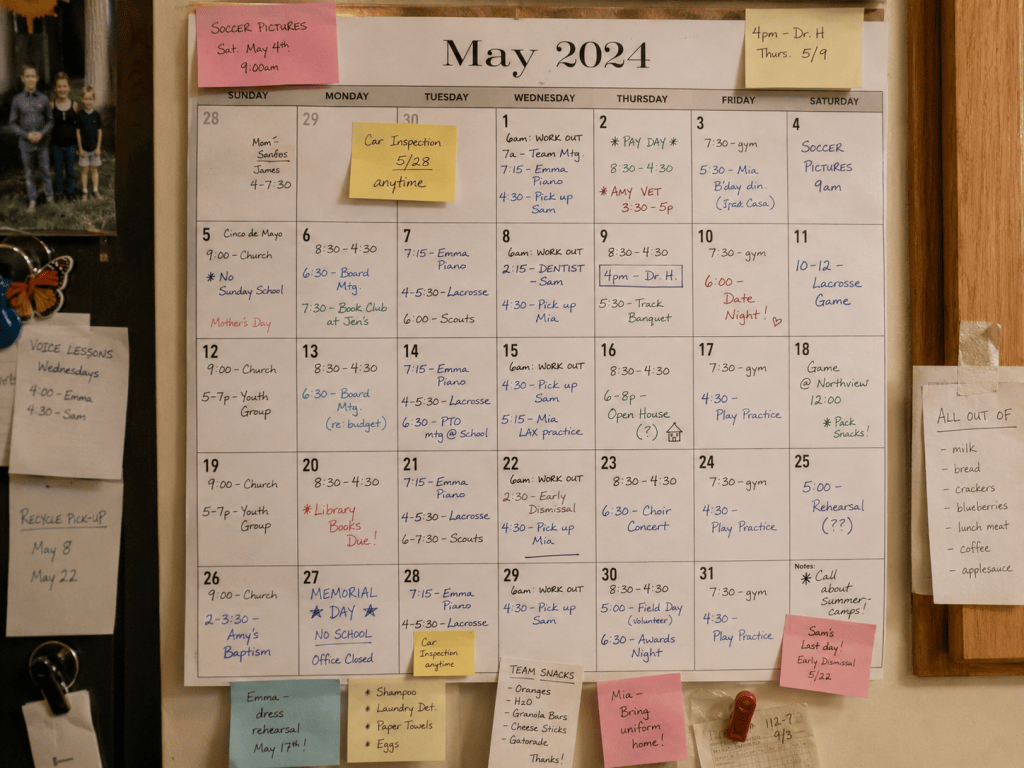
She showed me her calendar like it was evidence, and honestly, it was. Three months, not one white square. Work, church committee, kids’ ball, the extra project she volunteered for, the friend she helps move, the cousin’s shower she is throwing. She runs a home like a small corporation and a career on top of it, and she came to me because her body started shutting the operation down without her permission.
When I asked her what happens when she sits still, she looked at me like I had asked what happens if she steps off a roof. “I don’t sit still.” I know, I told her. That is why you are here.
Running without moving your feet
When people hear flight response, they picture literal running, and sometimes that is what it looks like: leaving jobs, towns, relationships, churches, always just before things get too close. More often, in the folks I see, flight never moves its feet at all. It just keeps the inside running.
Busyness is flight. A schedule packed so tight that no feeling can catch you, because feelings need stillness to land, and you have made sure there is nowhere to land. Perfectionism is flight, and this one surprises people. If I am flawless, criticism cannot reach me. If the house is spotless, the kids are polished, and the performance review glows, then nobody can hurt me, and the exhausting sprint for flawless never gets to end because the finish line is safety, not excellence. Avoidance is flight too, the quieter kind: the hard conversation postponed for six years, the doctor’s appointment never made, the folded-up feelings shoved in a drawer, the phone scrolled until 1 a.m. because the silence between your ears is the one room you refuse to enter.
Somewhere back down the line, this made perfect sense. Maybe motion kept you ahead of a chaotic house, or achievement was the only thing that earned safety and approval, or staying busy was how a child survived feelings too big for anybody to help her hold. Your legs learned to run before your mind knew what from.
Why stillness feels like danger
Flight-mode folks always think the problem is time management, so they buy planners. The problem is not the calendar. The problem is what happens when the calendar empties.
Sit a person like this down in a quiet room, and the alarm goes off. The heart speeds up instead of settling. And then the pickleball starts, that intrusive loop of thought that just keeps coming back over the net no matter how hard you smack it away. The conversation from 2014, the thing you should have said, the worry about the kids, the replay, the rehearsal. Stillness does not feel like rest to a flight-shaped nervous system. It feels like standing in an open field while everything you have been outrunning closes the distance.
So of course you stay busy. Busy is anesthesia, and it even pays well and gets you compliments at church. This is the survival response our whole culture rewards, which makes it the hardest one to catch. Nobody stages an intervention for the woman who does too much. They give her a plaque.
The body keeps honest books, though. Burnout, migraines, the immune system folding every vacation, the snapping at people you love, the strange emptiness underneath the productivity. You can outrun a feeling for years. You cannot outrun it forever, and the crash always costs more than the stillness would have.
Coming off the run
You do not heal flight mode by canceling everything and sitting in a silent room, any more than you sober up a sprinter by tripping them. A body that has run for thirty years needs to downshift through the gears, not slam the brakes.
Start embarrassingly small. Three slow breaths at a red light without reaching for the phone. Coffee on the porch for five minutes before the list starts. One white square defended on the calendar like it matters, because it does. When the pickleball starts, and it will, you do not have to chase it around the court. Notice it, name it, let it bounce, and bring your attention back to the porch, the coffee, the actual morning you are in. That returning motion, done a thousand times, is the training.
“Be still, and know that I am God” (Psalm 46:10, NKJV) used to sound like a threat to me, and if it sounds like one to you, that reaction is worth being curious about instead of ashamed of. Stillness is only frightening when it has never once been safe. It can become safe. Slowly, in five-minute installments, with help if the feelings that catch up are heavy ones, you can teach your body the thing it never got to learn: the danger has passed, the field is quiet, and you are allowed to stop running now.
This is education, not therapy, and reading it does not make me your therapist. If you are in crisis, call or text 988.
Related Posts
Religious Trauma: When Faith Got Used as a Weapon
