Trusting God With What You’re Becoming
Most of us can eventually get to a place of trusting God with circumstances. Hard, but we know the language for it. The job, the diagnosis, the kid, the money.
There’s a harder surrender underneath that one, and almost nobody names it.
Trusting Him with who you’re turning into.
The version you planned on
You had a picture. Everybody does.
The kind of mother you were going to be, the marriage you’d have at fifty, the kind of Christian, the person people would describe at your funeral. Some of it was ambition, some of it was correction of whatever you grew up in, and a lot of it you never said out loud to anybody.
Then a hard season comes through and starts changing you in ways you didn’t approve.
You’re more tired than you planned. Less patient with things you used to tolerate. You can’t go back to that church. Certain friendships went thin because you no longer have the energy for maintenance-only relationships. You’re blunter. You cry easier, or not at all anymore. You have opinions about God you’d have been alarmed by five years ago.
And the scary question underneath it is not “will things be okay.” It’s “am I becoming somebody I don’t want to be.”
Two things that look the same
Here’s the distinction that actually matters, and it takes some honesty to sort.
Some of the change is damage. Numbness where there used to be feeling. Cynicism doing a very good impression of wisdom. Walls that keep out the people who never hurt you. A short fuse with your kids that you keep explaining and not fixing.
Some of the change is growth that hurts. Lower tolerance for nonsense. Fewer, deeper friendships. A faith with less certainty and more weight to it. The ability to say no. Less interest in impressing anybody.
From the outside those can look identical. The person who’s gone cold and the person who’s finally got boundaries both stopped answering the phone.
So you have to check the fruit, not the behavior. Ask what it’s producing in you. Damage produces isolation, contempt, and a slow flattening. Growth produces quiet, some grief, and usually a strange new capacity for other people’s pain.
If you can’t tell which one you’re in, that’s exactly what an outside set of eyes is for. You’re inside the snow globe. You cannot see clearly from in there, and that’s not a criticism, it’s a physics problem.
What surrender means here
It doesn’t mean you have no say. You’re not a passenger, and any theology that makes you one has a lot of Scripture to explain away.
It means you stop requiring the outcome to match the picture.
Practically, it’s the difference between “God, make me the woman I planned to be” and “God, I don’t know what I’m turning into and I’m going to keep showing up anyway.”
That second one is harder, and it’s the only one I’ve ever seen actually work.
The scar tissue thing
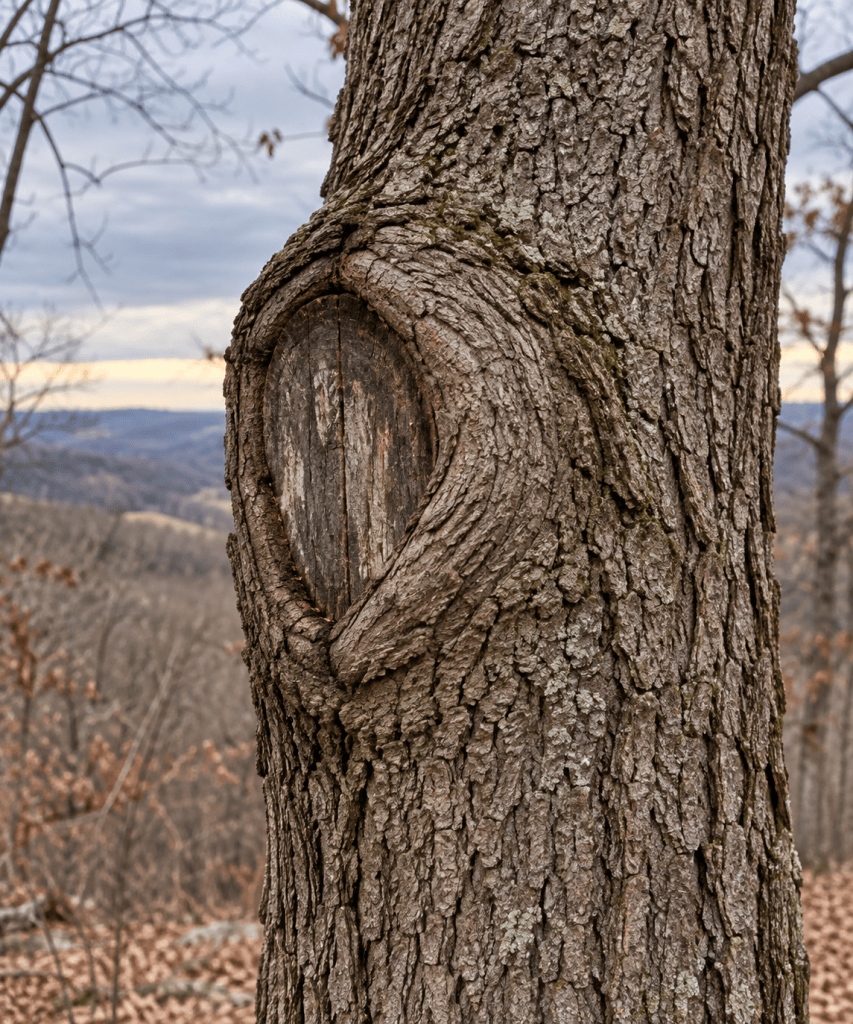
A tree that loses a limb doesn’t grow the limb back. It grows around the wound. Bark rolls in from the edges over years and forms a ridge, and that spot ends up denser than the wood around it.
The tree is permanently different. It’s also fine, and in that one place, stronger.
Nobody who’s been through something real goes back to the earlier version of themselves. We keep promising each other that. Get back to normal, feel like yourself again, be who you were before. That’s not the design. You’re going to grow around it, and the place where it happened is going to be permanently part of your shape.
I’d rather tell you that plainly than let you spend three years trying to get back to a person who no longer exists.
How to cooperate with it
Notice the changes on purpose instead of letting them happen to you. Write down what’s different about you this year. Then sort it. Keeping, working on, worried about.
Deal with the damage column directly, because it doesn’t resolve on its own. The numbness, the temper, the drinking, the wall. Those need attention, not time.
Let the growth column be uncomfortable. New capacity always feels wrong at first. Saying no feels like cruelty when you’ve never done it. A quieter faith feels like backsliding when you came up in a loud one.
Find people who knew you before and who won’t require you to be that. Some folks in your life are deeply invested in the old version because it was more convenient. Notice who’s making room and who’s pulling.
Stop apologizing for who you’re becoming before you even know who that is. A lot of people spend a whole season saying sorry for changes they haven’t finished making.
Where I land on it
I’m not the woman I was ten years ago and I’m not going to pretend I got here gracefully. Some of it I’d trade back in a heartbeat if trading were an option.
But the parts of me that are any use to anybody were mostly built in the stretches I’d never volunteer for again. That’s a lousy system. It’s also the one I’ve observed, over and over, in my office and in my own life.
You’re being made into something. You don’t get the blueprints, and I’ve quit expecting them.
Peel it back. Keep going. See what you turn out to be.
This is education, not therapy. If you’re in crisis, call or text 988 for the Suicide and Crisis Lifeline. If you’re in Kentucky and don’t recognize yourself lately, come talk to me at Circle of Hope Counseling Services.
Related Posts
You’re Allowed to Be Angry About What Happened
