Learning to Feel Safe in Your Body Again
Every so often a client shows up ready to charge straight at the worst memory on the first visit. They come at it with machete out and a “let’s go”. I admire the courage. Also, I always slow us down. There is an order to this work. Regulation comes before resolution. A nervous system has to learn what safety feels like before it can afford to revisit what danger felt like. The revisiting just becomes one more overwhelming event in the pile.
I wanted to provide more tools, the same ones I teach in my office. None of these require equipment, money, or anybody’s permission.
The Band You Can Live In
Picture a band of intensity where life is workable. Inside that band, you can feel things, even hard things, and still think, choose, and stay present. Above the band is the revved-up zone, panic, rage, the stuck gas pedal. Below it is shutdown, the fog and numbness we covered in the freeze post. Trauma narrows the band, sometimes down to a sliver, so ordinary days keep pitching you over one edge or the other.
The tools that follow all serve one purpose which is widening that band. It is helping you find your way back into it when you get thrown out. That is what regulation means. This does not mean you are staying calm all the time, which is neither possible nor even healthy, but being able to come back.
Tools That Talk to the Basement
Grounding through the senses.
When the past floods in, the senses are the fastest road back to the present. The classic version is to name five things you can see, four you can hear, three you can touch, two you can smell, one you can taste.
It sounds too simple to work. However, it works because the alarm system runs on sensory information. When feeding it present-tense sensory information is speaking its native language. My shorter version for something like the grocery store is feet on the floor, name what is actually in front of you, out loud if you can get away with it.
The long exhale.
You cannot order your heart to slow down. The breath is the one lever on the calming system that answers to the steering wheel. The trick is not deep breathing, it is slow exhaling. In through the nose for a count of four, out slow through pursed lips for six or eight, like cooling soup. A handful of those rounds tells the body, in chemistry rather than words. Remember, nobody sprinting from danger breathes like this, so the danger must be passing.
Movement and rhythm.
Trauma is revved energy that never got spent. Sometimes, the body just needs to finish the motion. Walk fast, push against a wall, shake out your hands, work in the garden, knead bread. Rhythm settles a nervous system too, which mamas have known forever. It is why we rock babies. Humming and singing count double, because the voice runs right through the calming circuitry. There is a reason the hymns help, and it is not only the theology.
Cold and warmth.
Cold water on the wrists and face taps an ancient calming reflex when you are spun up high. A warm shower, a heavy quilt, a mug in both hands can shut-down the system gently back online. Learn which direction you tend to get thrown. Is it over the top or under the bottom. From there, you can stock the right remedy.
Practice Like It’s a Fire Drill
Here is the part everybody skips. These tools barely work if the first time you try them is mid-flood. This is for the same reason nobody learns to swim in a riptide. The alarm is loud, the upstairs is offline, and a technique you have used twice does not stand a chance.
Practice small and daily, in calm moments, until the tools become paths your body already knows. Three long exhales at every red light. Grounding while the coffee brews. A walk after supper. You are not wasting the practice on days you feel fine. You are paving the road you will need on the day you don’t. When that day comes, your feet will know the way home even with the sirens going.
Be patient with the pace, too. A body that spent decades braced will not believe one good week. It believes accumulation, hundreds of small proofs, each one a brick in the case that the war is over. Some mornings, take the proof outside.
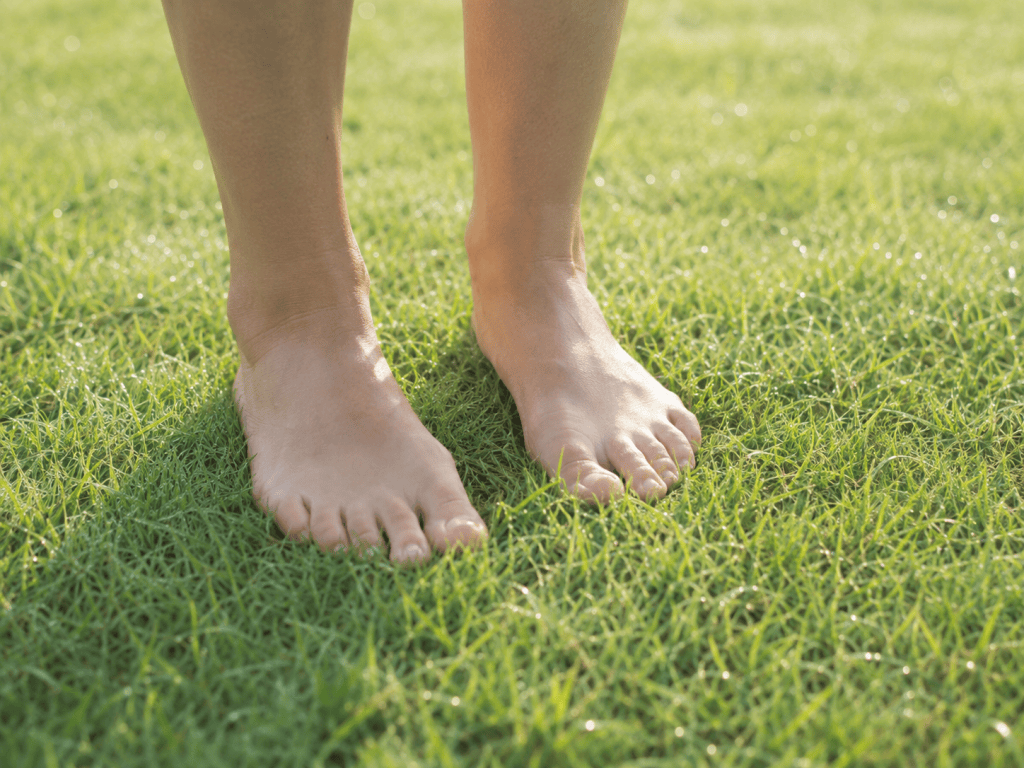
Stand barefoot in the grass with your coffee, feel the ground actually holding you up, and let that be the day’s first true thing. The earth under your feet, the breath in your lungs, the mercies new every morning. Safety is not just an idea you decide. It is a language your body relearns. One small sentence at a time. Today can hold three or four of those sentences if you let it.
This is education, not therapy, and reading it does not make me your therapist. If you are in crisis, call or text 988.
Related Posts
Trauma Is Not What Happened, It Is What Happened Inside You
