Peace Comes When You Stop Carrying What Isn’t Yours
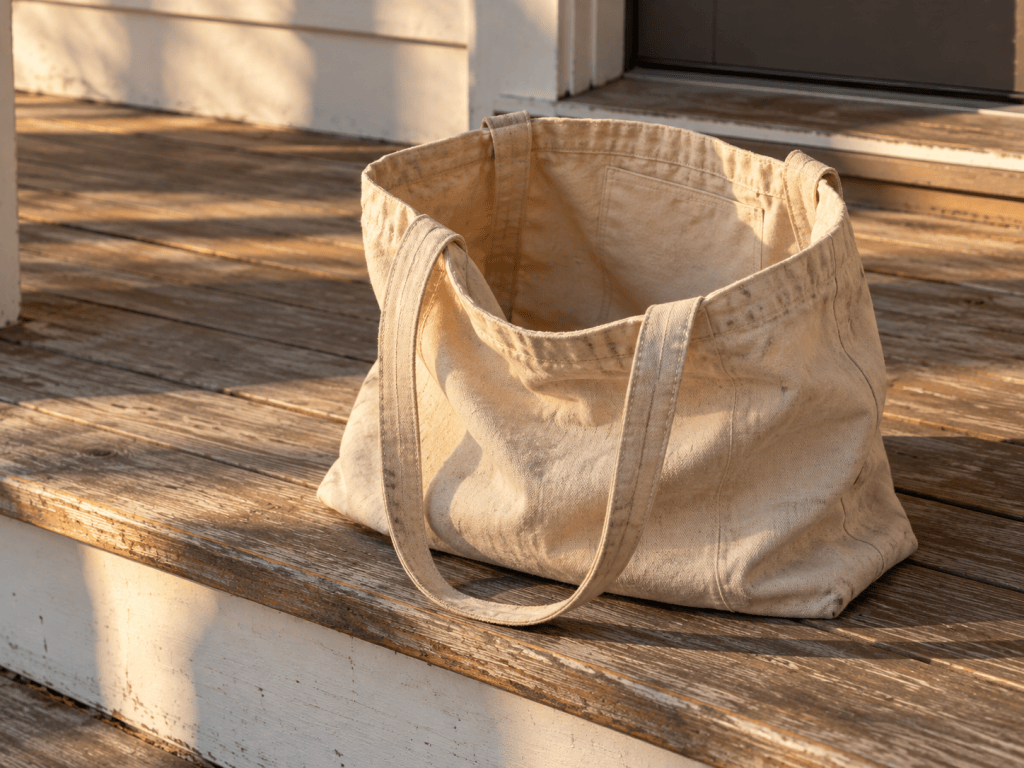
I wrote a post last month about sorting out what’s yours and what isn’t. This one’s about what happens after the sorting. That’s the part nobody tells you and it’s where most people turn back. You put something down. And then, for a while, you don’t feel peaceful at all.
The two weeks after
Here’s the sequence almost everybody goes through, and knowing it in advance is most of the battle.
Day one is relief, sometimes a big one. You didn’t take the call, you didn’t fix it, you left it with the person it belonged to, and there’s a lightness that startles you.
Then somewhere in the first week, the guilt arrives. Not reasoned guilt. The physical kind, in your chest, usually in the evening. You’ll start constructing arguments for why this particular case is different and you really should just handle it this once.
Around the same time, the system pushes back. Every family is a system, and when one part stops doing its job, the whole thing works to restore the arrangement. There will be phone calls. Somebody will bring it up sideways at dinner. Somebody will get sick. You’ve changed, they’ll say, and they’ll be right, and they’ll mean it as an accusation.
Then, if you hold, the strangest part. Emptiness. You’ve been oriented around other people so long that your own inner life is unfamiliar country, and the first walk through it is quiet in a way that feels less like peace and more like a house after everybody’s gone home.
That stretch is where people pick the load back up. Not because they were wrong. Because the emptiness felt worse than the weight did.
Why peace is late
Peace is not the absence of the burden. If it were, you’d feel it the same afternoon. Peace is what grows in the space the burden was taking up, and growth takes a season. Meanwhile the space is just space, and space is uncomfortable for a person who has never had any. I’d rather tell you that plainly than let you think something’s gone wrong at week two.
Holding through the middle
Keep your hands still when the pushback comes. This is the entire test. Not the announcement, not the decision. What you do the fourth time somebody tries to hand it back.
Have one sentence ready and use it every time. “I’m not able to take that on.” Same words, no new reasons. Fresh explanations invite fresh negotiation.
Don’t fix it quietly later. Handling it at 10pm after everybody’s asleep so nobody knows you caved is the most common way this unravels, and you’ll know, which is what matters.
Let somebody be upset with you overnight. Practice this one on something small. Most over-carriers have never let a person stay disappointed in them past bedtime, and the discovery that everyone survives it is genuinely life-changing.
Put something in the space on purpose. Not another obligation. Something that produces nothing. An hour that’s yours, a thing you’d be bad at, a walk with no destination. Empty space gets filled by whatever’s nearest, and whatever’s nearest is usually another person’s problem.
What peace actually feels like when it shows up
Not serenity. Nobody I’ve worked with describes it that way.
It shows up as quiet in the background. There’s a channel that’s been running constantly, tracking everybody, and one day you notice it’s off and you don’t know how long it’s been off.
It shows up as being able to hear a hard thing without immediately planning. Somebody tells you their trouble and you just listen, because it isn’t yours to solve, and they didn’t ask you to.
It shows up in your body first, honestly. Jaw, shoulders, the breath going lower. People notice that before they notice anything mental.
And it shows up as room for the people you love. This is the one that convinces the skeptics. When you’re not managing somebody, you can actually enjoy them, which you have not done in years.
The cost nobody mentions
Some relationships get thinner after you put things down, and I won’t pretend otherwise.
A few of your connections were running on the arrangement. When the carrying stops, there’s less between you, and some people fade. That’s a real loss and it’s worth grieving, and it also tells you something true about what was there.
Others get better than they’ve ever been, because for the first time you’re standing beside them instead of underneath them.
Family is who you want it to be, not necessarily who’s blood. That line does a lot of work in this particular season.
If you’re in the hard middle right now
Hold another two weeks. That’s my whole advice. The guilt drops. The pushback quits when it stops producing results. The emptiness fills with something better than what was in it, and you will not be able to see any of that from where you’re standing tonight.
Nobody ever picks the weight back up after the peace arrives. They pick it back up in the middle, which is exactly where you are. Baby steps. Hold on a while longer.
This is education, not therapy. If you’re in crisis, call or text 988 for the Suicide and Crisis Lifeline. When sitting with your feelings takes you somewhere too big to handle alone, that’s exactly what a therapist is for, and in Kentucky you can find me at Circle of Hope Counseling Services.
Related Posts
God Is Near the Broken, Not Disappointed in Them
