Learning to Rest Without Withering
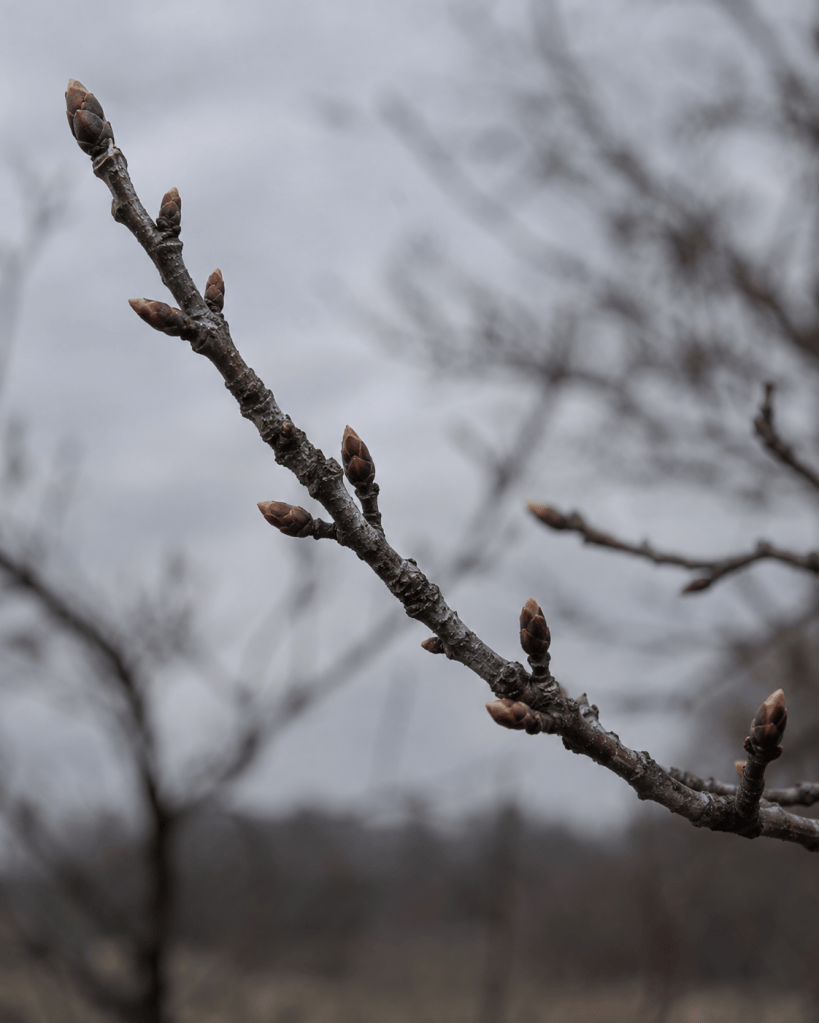
A dormant tree is not doing nothing. It’s converting starch to sugar so its cells don’t burst when the temperature drops, hardening off its tissue, and building next spring’s buds. Every bud that opens in April was constructed in the dead of winter by a tree that looked, to anybody walking past, like it had quit.
We don’t have a good word for that in human terms. We’ve got productive and we’ve got lazy, and anything that isn’t visibly producing gets filed under lazy, including the parts of a life that are structurally necessary.
Why rest feels dangerous
I work with a particular kind of woman a lot. Competent, running four systems at once, everybody’s first call, cannot sit down.
When she tries to rest, one of a few things happens.
Her mind gets loud. The second the doing stops, everything the doing was outrunning shows up. This is the one people misread most. They conclude rest doesn’t work for them, when what actually happened is rest worked immediately and revealed the backlog.
She feels guilty in her body. Not a thought, a physical restlessness, like the couch is electrified. That’s usually a nervous system with no reference for safe stillness, often built in a house where stillness got noticed and commented on.
She rests wrong on purpose. Scrolls for two hours, ends up more depleted, and takes that as evidence that she may as well have worked.
Or she rests so hard it turns into collapse. Three days flat, can’t get up, hates herself, gets up, and immediately overcorrects into another eight weeks of grinding.
None of those is dormancy. They’re the flailing that happens when a body needs something it has no template for.
The difference between dormancy and withering
Both look like stillness. They’re opposites.
Dormancy is protected, chosen, and temporary, and it’s doing internal work the whole time. Withering is a system losing water it can’t replace.
Practically, here’s how you can tell them apart in your own life.
Dormant rest leaves you slightly more yourself. Not energized necessarily, but more here. Withering leaves you thinner. Vaguer. Further away from the room.
Dormant rest has an edge you chose. “I’m off Sunday.” Withering has no edges. It bleeds, and you stop knowing whether you’re resting or avoiding.
Dormant rest lets you feel things. Withering is numb by design. If the point of your downtime is to stop feeling anything, that’s an anesthetic, not a rest.
I’m not going to pretend the line is always obvious. A hard depressive stretch can look like either one from the inside, and sometimes the answer is that you need help, not a better rest plan. If you’ve been flat for weeks, please talk to somebody. That’s not a failure of scheduling.
How to actually do it
Start absurdly small. Ten minutes, sitting, no phone. Most people cannot do this the first time and that tells you something worth knowing.
Pick rest that has a body in it. Sitting on the porch, a bath, a slow walk, hands in dish water, a dog. The reason scrolling doesn’t restore anything is that it keeps your nervous system in the same alert state as the work did. Your body doesn’t know the difference between a work email and an argument in the comments.
Give it an edge on both sides. A start and a stop. Open-ended rest turns into a fog you feel worse after, because nothing about it was chosen.
Let the loud part be loud, at least for a minute. When you sit down and the list starts screaming, that’s the backlog, not proof you should get up. Write down the three things it’s yelling about so it will quiet, then sit back down.
Tell somebody what you’re doing. “I’m off tonight.” Out loud. It closes the door.
Do it before you need it. Dormancy scheduled in November beats an ice storm in January. Rest is much easier to learn while you can still choose it.
The thing under the guilt
Most people who cannot rest have a belief running underneath that they don’t say out loud.
The belief is that they’re only welcome because of what they produce.
If that’s in there, no amount of self-care advice is going to touch it. You’ll do the bath and spend the whole bath calculating what you owe people for the bath. The work is the belief, and the belief usually got installed early by somebody whose love ran on performance.
I’d ask you what I ask a lot of people. When did you fall out of love with yourself? Not who taught you the story. When did you start agreeing with it?
What I’d tell you
There is nothing productive about withering, and there is nothing lazy about dormancy, and the tree does not consult anybody about which one it’s doing in January.
Go sit down. Your buds get built in the cold, and you’re not going to have anything to open in April if you spend this whole winter trying to look busy.
This is education, not therapy. If you’re in crisis, call or text 988 for the Suicide and Crisis Lifeline. If you’re in Kentucky and you can’t sit still without your chest getting tight, that’s workable. Circle of Hope Counseling Services.
